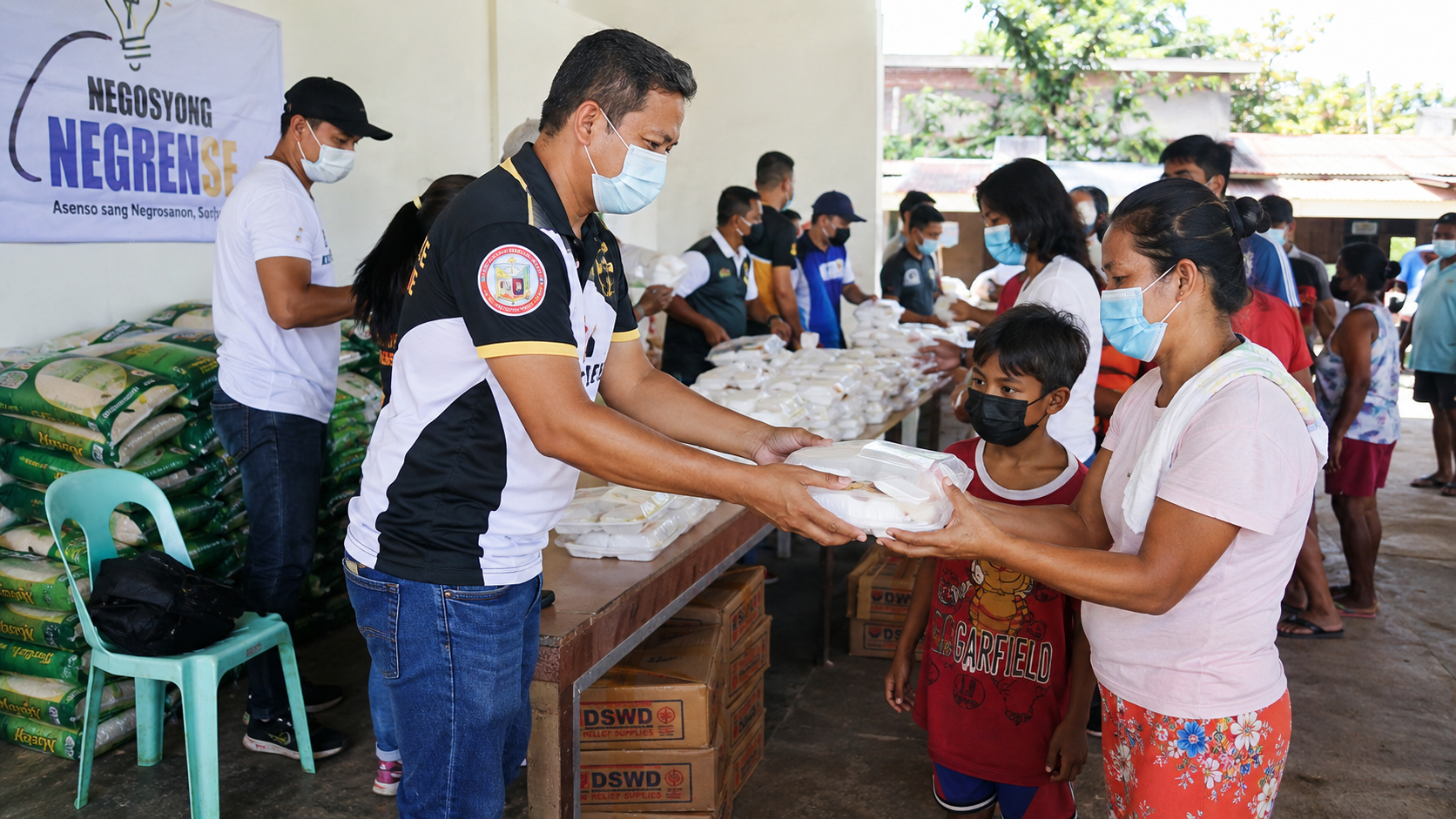
The Walang Gutom initiative has reached 51,000 families on Negros Island, a milestone reported as the Philippines kicks off its annual Nutrition Month observance. Medical News Today, citing the Philippine Information Agency, covered the update.
The report highlights the scale of the distribution on Negros Island, a key agricultural region in the central Philippines, and ties this activity to the broader Nutrition Month activities intended to raise awareness about food security and nutrition.
Context
Nutrition Month in the Philippines is a recurring public awareness campaign that traditionally focuses on improving diets and preventing malnutrition. Media accounts describe Walang Gutom as a government-led effort aimed at addressing hunger and acute food needs, particularly among vulnerable households.
Food assistance programs such as Walang Gutom operate alongside other health and social services. They are often highlighted during Nutrition Month to draw attention to ongoing gaps in access to adequate food and to mobilize local resources for immediate relief.
What the report found
According to the Medical News Today story based on Philippine Information Agency reporting, the Walang Gutom program reached 51,000 families across Negros Island. The coverage notes this figure as the program rolled out activities timed with the start of Nutrition Month.
The announcement appears intended to communicate the program’s reach and to show coordination between national and local authorities during a month focused on nutrition-related messaging and interventions.
Why this matters
Reaching tens of thousands of households with food assistance matters for two reasons. First, it provides immediate relief to families facing food insecurity, reducing the short-term risk of hunger. Second, publicizing the distribution during Nutrition Month can help draw attention to longer-term challenges, such as chronic undernutrition, gaps in social protection, and the need for sustained community-level support.
Programs that combine immediate food aid with health, nutrition education, and links to social services are more likely to support household resilience over time. Announcements like this give policymakers, local officials, and communities an opportunity to evaluate which areas need ongoing support beyond one-time distributions.
Evidence
The core evidence in the coverage is the outreach number: 51,000 families reportedly reached on Negros Island. That figure comes from government reporting relayed in the article. The story does not present independent verification of delivery, household-level impact, or nutritional outcomes tied to the distribution.
In other words, the report documents the scope of distribution activity rather than measured changes in dietary intake, child growth, or other health outcomes. Those kinds of outcomes require follow-up assessments and monitoring over time.
What to keep in mind
First, a large number of households receiving food assistance does not automatically translate into improved long-term nutrition. Food quantity, quality, timing, and repeated access all influence health impacts.
Second, media reports based on government releases are useful for tracking program scale, but they are limited. They do not substitute for independent evaluations that assess whether assistance reaches the most vulnerable, how households use the aid, or whether the intervention reduces malnutrition indicators.
Finally, Nutrition Month activities often include both short-term relief and awareness campaigns. Readers should distinguish between emergency food distributions and sustained programs that address underlying causes of poor nutrition, such as poverty, lack of dietary diversity, inadequate health services, and sanitation.
The bottom line
The reported milestone of 51,000 families reached on Negros Island signals a substantial distribution effort tied to the start of Nutrition Month. It underscores ongoing food insecurity concerns and the role of public programs in providing relief. However, the announcement does not by itself demonstrate longer-term improvements in nutritional status.
Households interested in support should contact local government units or social services offices for information about eligibility and ongoing assistance. Healthcare providers and public health workers can help families link short-term food aid to broader nutrition and health services where available.
Medical caution: If you have concerns about the nutritional health of you or a family member, speak with a qualified health professional. This article summarizes media reporting and does not replace clinical advice or program-specific guidance.
Attribution: This article is based on a Medical News Today story that cited reporting from the Philippine Information Agency.