New laboratory research suggests the type of liquid you use to swallow a pill can matter. Tests reported in Pharmaceutics (April 2026) found that tap and filtered water provoked less premature release of active drug from some enteric coated tablets than several alkaline mineral waters.
This summary is based on reporting by Medical News Today and the original study authors. The research compared 22 commonly consumed beverages and also reviewed patient information leaflets and summaries of product characteristics for 103 gastro resistant medicines to see whether guidance on what to drink with a pill is provided.
Context
Enteric, or gastro resistant, coatings are applied to certain oral medicines to protect the active ingredient from stomach acid and to ensure release further along in the digestive tract, usually the intestines. If that coating breaks down too early, the drug may be released in the stomach instead of the intestine, which can reduce effectiveness, irritate the stomach, or change how the medicine is absorbed.
Evidence
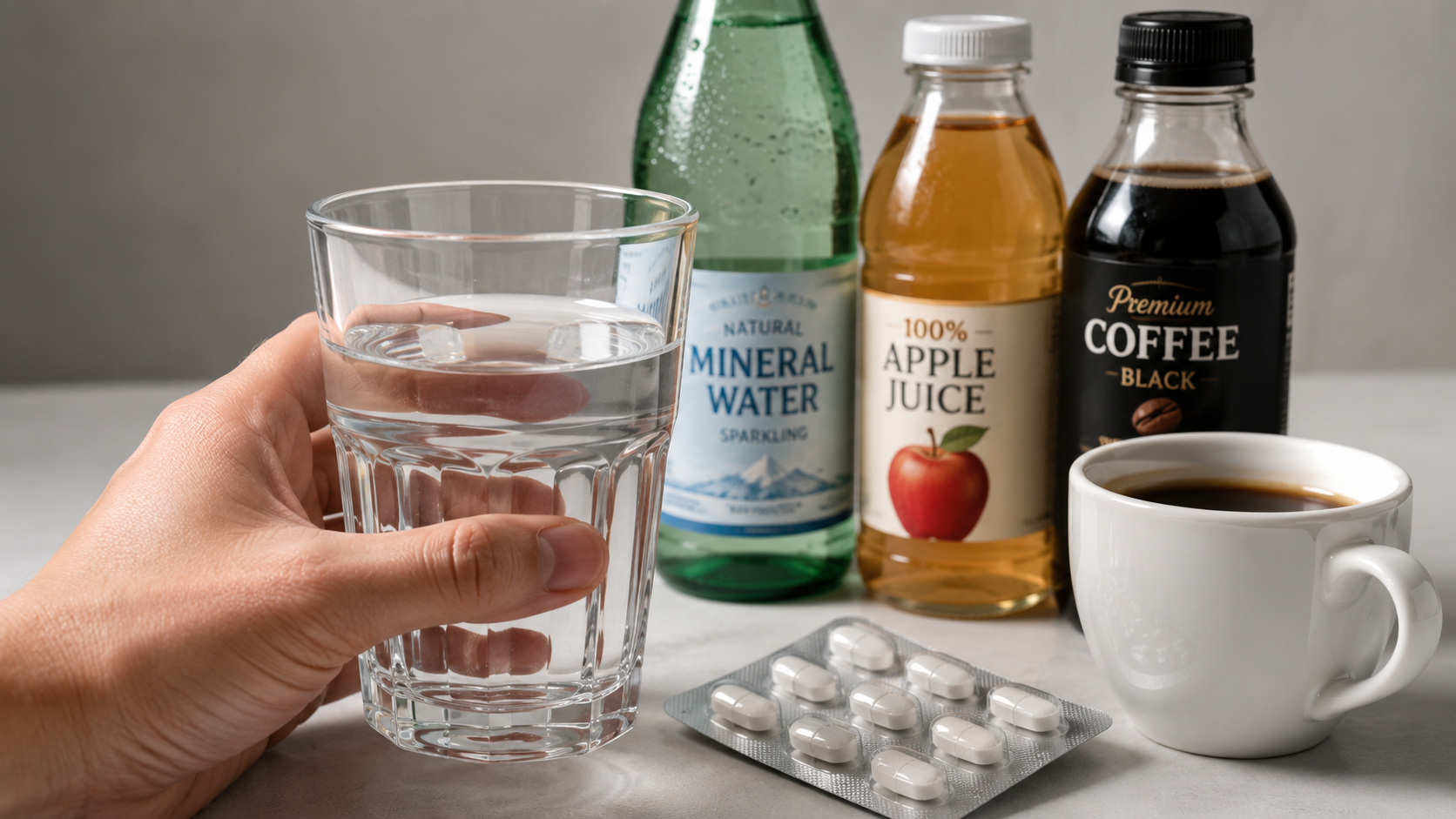
The study tested 22 beverages, including tap water, filtered water, several mineral waters, apple juice, coffee, black tea, and milk. In laboratory soaking tests the authors report that select alkaline mineral waters caused rapid breakdown of enteric coatings. For example, soaking tablets in Salvus medicinal mineral water produced more than 90 percent release of the active ingredient within five minutes, a result the researchers described as near complete coating failure. Some other mineral waters triggered substantial premature release after 15 or 30 minutes.
By contrast, the authors say tap and filtered water produced lower drug release in the same tests. The team also examined publicly available medication leaflets and summaries of product characteristics for 103 gastro resistant oral medicines. They found that just 8.7 percent included clear instructions about what type or amount of liquid to use. Where guidance existed it often simply recommended “water” without specifying the kind.
Study coauthor Nikolett Kállai Szabó, PhD, told Medical News Today that alkaline medicinal mineral water released over 90 percent of the drug after five minutes of soaking, and noted that people most likely to open capsules or modify pills include older adults and people with swallowing difficulties. Independent GP Opel Baker, quoted in the same report, pointed out that beverages many people view as harmless can interact with medicines.
Why this matters
Most patients do not get specific instructions about what to drink when taking oral medicines. If a beverage alters when and where a drug is released, that could change how well it works. This is particularly relevant for people who modify pills to aid swallowing (for example by splitting or opening capsules) or who use different drinks because they find plain water unpalatable. Older adults and people with dysphagia may be at higher risk of unintentional changes in drug release because they are more likely to alter how they take their medicines and, according to the authors, may more frequently drink alkaline mineral waters.
What to keep in mind
These results come from laboratory soaking tests that simulate exposure of a coated tablet to different liquids. Laboratory findings do not automatically translate to clinical outcomes in people, where stomach emptying, saliva, and individual differences can affect what happens to a pill after swallowing. The study did not measure health outcomes such as loss of efficacy or increased side effects in patients.
Also, the tests focused on enteric coated formulations; many pills do not have such coatings and would be unaffected. The review of drug leaflets highlighted a regulatory and communication gap: most manufacturers do not give detailed guidance on the type of liquid to use when taking oral medication.
Finally, the study named specific mineral waters and beverages that caused rapid coating breakdown in laboratory conditions. That does not mean every product in a category will behave identically, nor that all enteric products are equally vulnerable.
The bottom line
The study reported in Pharmaceutics and described by Medical News Today suggests that tap or filtered water is less likely, in laboratory tests, to cause premature breakdown of some enteric coated medicines than certain alkaline mineral waters. Because most medication leaflets do not specify the type of water to use, simple, evidence based guidance could help reduce the chance of unintentionally changing how a medicine behaves.
Reader takeaway
If you are unsure what to drink with a pill, water is generally a safe default. When a leaflet does not specify the type of water, ask your pharmacist or prescriber whether a specific liquid should be avoided. People who split, crush, or open capsules to aid swallowing should check with a pharmacist before doing so, because manipulating some formulations can change where and how a drug is released.
Talk with a qualified health professional before making changes to how you take medicines. This study adds laboratory evidence that the vehicle used to swallow a tablet matters for some coated drugs, but it does not replace clinical guidance tailored to your prescriptions and health conditions.