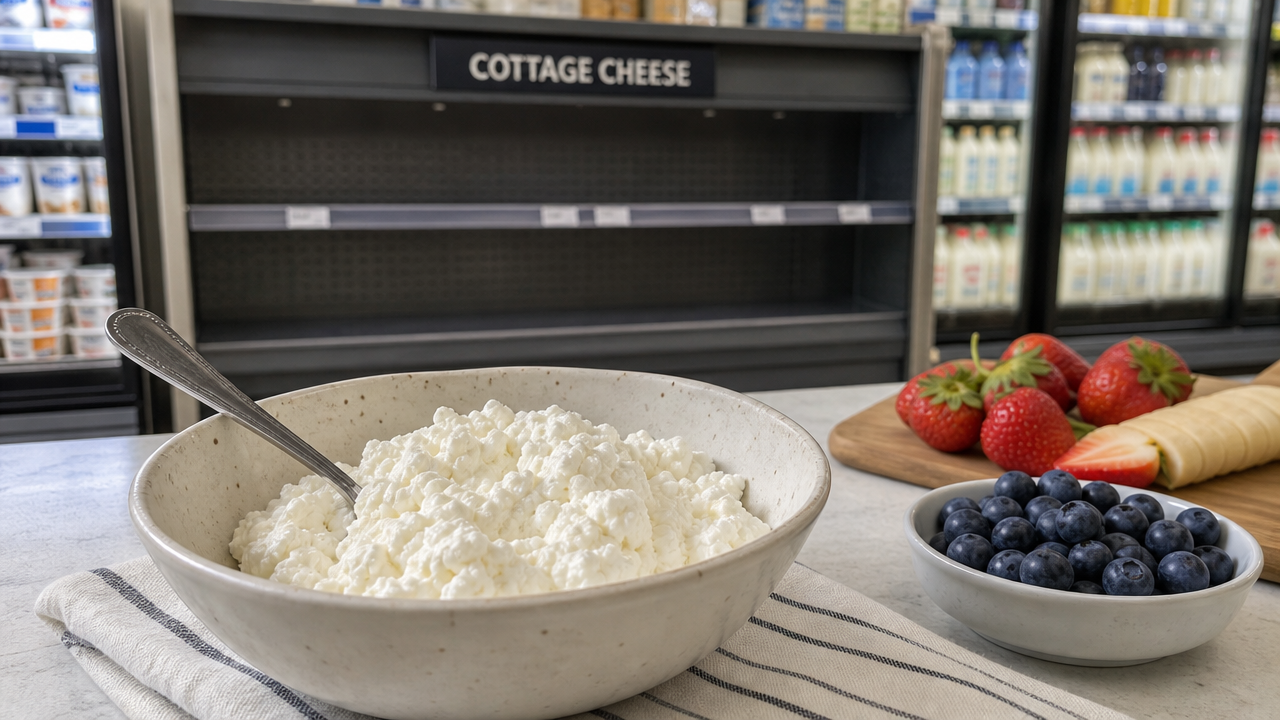
Supermarket shelves in many areas have shown empty spaces where cottage cheese usually sits, driven by a surge in consumer interest. But Medical News Today reports that nutrition experts caution cottage cheese may not deliver as much protein per serving as some shoppers assume.
Medical News Today covered the recent shortage and spoke with nutrition experts about how cottage cheese is being perceived. Their reporting highlights a gap between the snack food’s growing popularity and the actual nutrient profile many people expect from it.
Why this matters
Demand-driven shortages affect household budgets and meal planning. When a food becomes trendy, people may shift their grocery lists and recipes toward it. That makes it important to understand whether that food meets your goals, whether those goals are getting more protein, cutting calories, or changing fat intake.
For people prioritizing protein, believing a single food is a superior source without checking the facts can lead to unmet expectations. Knowing the real contribution a food makes to your daily protein needs helps you plan meals more reliably and avoid surprise shortfalls.
Context
Cottage cheese has been a longtime staple in some diets and has recently gained new attention from influencers, recipe trends, and shoppers looking for convenient protein options. That renewed interest appears to have stretched supply chains in some regions, producing local shortages.
At the same time, coverage in outlets such as Medical News Today indicates that experts are urging people to check nutrition labels and not assume that cottage cheese automatically provides more protein per serving than other dairy or non-dairy options.
What the evidence shows
Medical News Today relayed experts observations that not all cottage cheese products are the same. Different brands and product lines vary in fat, moisture, and ingredient formulation. These differences affect portion volume and nutrient density, including how much protein ends up in a typical serving.
Nutrition professionals commonly recommend looking at the nutrition facts panel to compare foods on an apples-to-apples basis: protein per serving, protein per 100 grams, and how large a serving actually is. That approach clarifies whether a food meets personal protein targets.
Experts also remind shoppers that the way cottage cheese is used matters. In recipes or as a mix-in, the actual amount consumed can be less than a standard serving, reducing the protein you get compared with eating a full portion on its own.
What to keep in mind
Check labels. Different cottage cheese types and brands vary. Plain versions and reduced-fat options will have different nutrient profiles than fuller-fat or dessert-style varieties.
Consider serving size. A packaged serving may be smaller than what you scoop into a bowl. Compare protein on a per-serving and per-weight basis when possible.
Think variety. If cottage cheese is hard to find or if you need more protein than it provides, other foods can help meet goals. Dairy, eggs, fish, poultry, legumes, and some fortified plant-based products all contribute protein in different ways and textures.
Be mindful of overall meal planning. Protein needs vary by age, activity level, and health status. One food alone rarely covers a full day. Combining protein sources across meals and snacks tends to be more reliable.
Limitations
The Medical News Today coverage is a news report summarizing expert commentary and market observations. It is not a systematic review of nutrient databases or a new clinical study comparing foods. Regional availability and the extent of shortages vary over time and place, so experiences will differ by location.
Also, product formulations can change and manufacturers may offer high-protein formulations that differ from standard cottage cheese. Without checking specific products, it is not possible to say definitively how any one package compares to another.
The bottom line
Cottage cheese has become more popular recently, and that popularity has contributed to shortages in some stores, according to reporting by Medical News Today. Nutrition experts quoted in that coverage urge consumers to look beyond the hype: cottage cheese can be a useful protein-containing food, but it is not universally the highest-protein option per serving and varies by product.
Practical steps include reading nutrition labels, comparing protein per serving and per weight, being flexible with substitutes when supplies are low, and planning meals to meet overall protein needs rather than relying on a single trendy item. If you have specific dietary goals or medical conditions, consult a registered dietitian or your health care provider before making substantial changes to your diet.