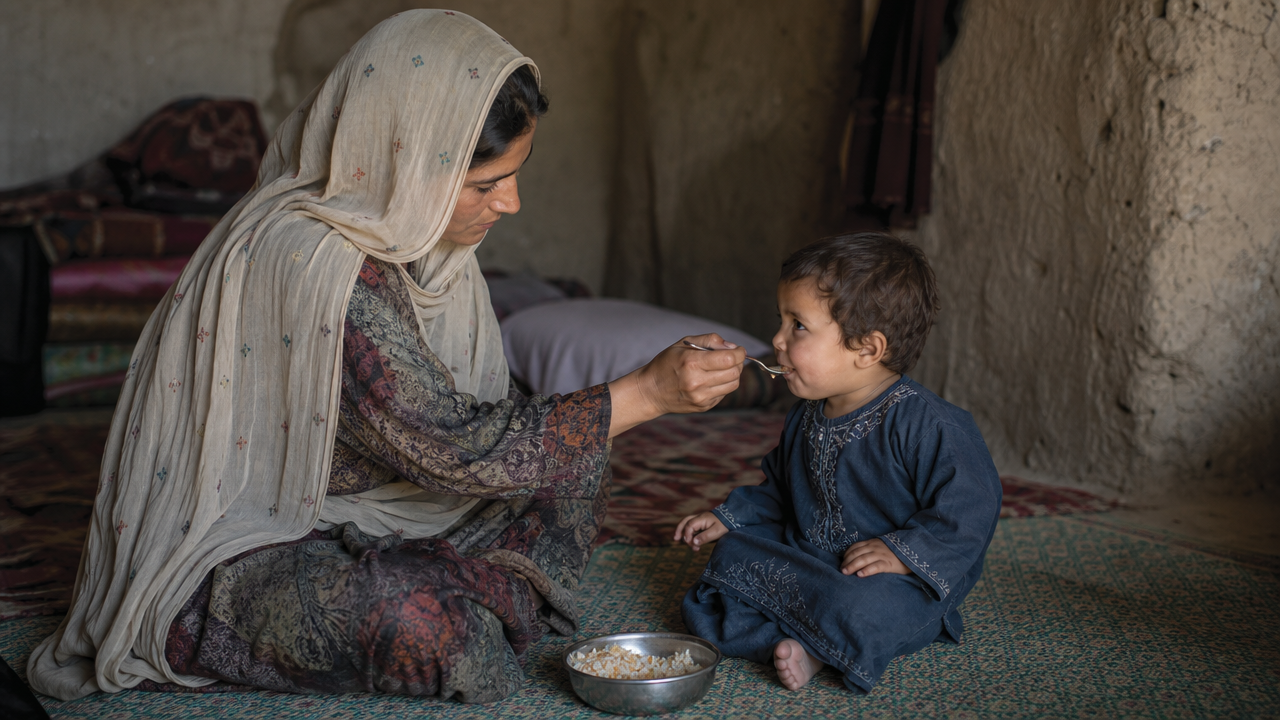
A new report highlighted by Medical News Today draws attention to a worsening diet crisis affecting young children in Afghanistan. The coverage points to concerns about what young children are eating and the potential short and long term consequences for their health and development.
Medical News Today is summarizing a June 2026 ReliefWeb article titled “Too Little, Too Late: The Diet Crisis Facing Young Children in Afghanistan.” That ReliefWeb piece reports on conditions in the field and describes shortfalls in the diets of infants and toddlers across parts of Afghanistan.
Context
Nutrition in the first 1,000 days of life, from conception through a child s second birthday, is widely recognized as critical for growth, immune function and brain development. In humanitarian settings, disruptions to food systems, health services and household incomes can reduce both the quantity and variety of foods available to families, increasing the risk of undernutrition and micronutrient shortfalls.
Evidence
The ReliefWeb article, as relayed by Medical News Today, compiles reporting from humanitarian sources working in Afghanistan. It describes inadequate diets among young children, suggesting that many are not receiving the range of foods needed for healthy growth. The piece is reporting observations from the field rather than presenting new peer reviewed research.
Limitations
Public reporting summarized here does not provide detailed, nationally representative survey results or new clinical data. ReliefWeb aggregates field reporting and assessments, which can vary by location and time. The original coverage does not appear to include precise prevalence numbers, standardized nutritional measurements, or results from randomized studies. That means readers should understand this as urgent reporting from humanitarian actors and not as a definitive epidemiological study.
Why this matters
Even without exact numbers in the public reporting, concerns about young children s diets matter because early nutritional shortfalls can have lasting effects on growth and cognitive development. In a fragile setting, gaps in feeding practices, food access and health services can quickly translate into higher risks of illness and slower recovery from infections.
What to keep in mind
ReliefWeb s coverage is field based and aims to prompt humanitarian attention. It highlights a problem that requires reliable, up-to-date surveys and coordinated responses from health and nutrition services. For caregivers, local health clinics, community programs, and official humanitarian channels are the appropriate routes for assessment and support. If you are caring for a child and are worried about growth or feeding, seek help from a qualified health professional or local health authority.
The bottom line
Medical News Today s summary of the ReliefWeb article raises alarm about dietary shortfalls among young children in Afghanistan. The report signals the need for strengthened nutrition monitoring and humanitarian support, but the public reporting does not replace detailed, representative nutritional surveys. Follow updates from humanitarian organizations and health authorities for more specific data and recommended actions.
Medical caution: This article summarizes reporting. It does not provide medical advice. Caregivers with concerns about a child s nutrition or health should consult a qualified health professional or local health services promptly.