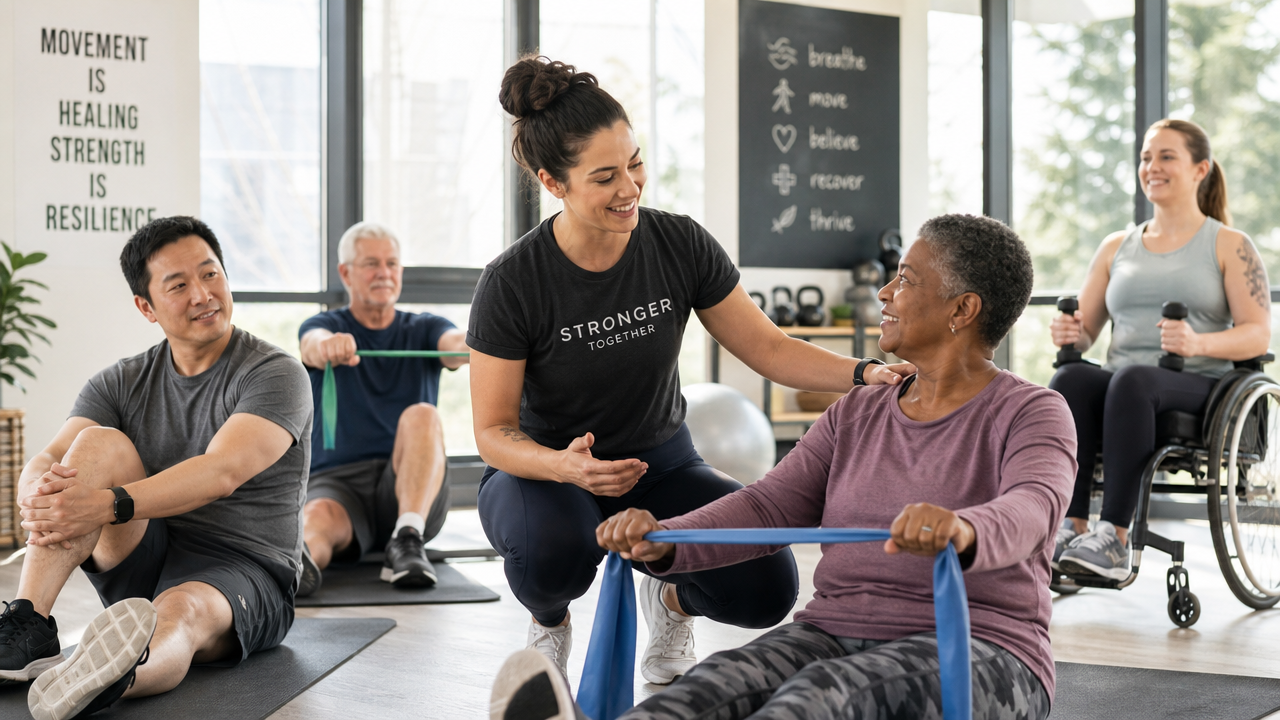
According to Medical News Today, Chris Holt, whose story has appeared in Men’s Health, is turning what the press describes as an extraordinary survival story into a program to train Fitness Recovery Coaches.
Medical News Today reports Holt has been featured in outlets including Men’s Health and the Bergen Record as he builds a mission around helping others return to activity after serious setbacks. The coverage highlights his shift from personal recovery to training others in a supportive coaching role.
Context
“Fitness recovery coach” is a term increasingly used to describe professionals who support people returning to exercise after illness, injury, surgery, or prolonged inactivity. These coaches typically combine exercise guidance with motivation, pacing strategies, and referrals to medical or rehabilitative care when needed.
Interest in structured support for returning to activity has grown as more people seek guided, safe ways to rebuild fitness after major health events. Programs and titles vary widely, from certified medical rehabilitation clinicians to fitness professionals with additional training in recovery principles.
Evidence
The report in Medical News Today focuses on Holt’s initiative and media coverage. It describes his intent to train others to help people reclaim movement and fitness after traumatic experiences. The coverage is primarily descriptive and profile-based, not a presentation of clinical research.
There is a broader, but still mixed, evidence base on the benefits of supervised, progressive exercise after injury or illness. Randomized trials exist for specific conditions and rehabilitation protocols, but the effectiveness of a loosely defined role such as “fitness recovery coach” depends heavily on training, scope of practice, and collaboration with medical professionals.
Why this matters
Many people face barriers when returning to activity after a major health event: fear of re-injury, uncertainty about safe progression, and lack of tailored support. People who have navigated serious recoveries themselves can bring empathy and practical experience to coaching roles, which may improve motivation and adherence.
When such initiatives are paired with appropriate clinical oversight and evidence-based exercise prescriptions, they can fill gaps between formal rehabilitation and general fitness services.
What to keep in mind
Coverage of Holt’s work is encouraging for anyone seeking options after a setback, but readers should note this is a profile of a program, not proof of clinical benefit. The title “fitness recovery coach” is not a regulated credential on its own. Training programs, certifications, and the coach’s medical oversight determine safety and effectiveness.
Before starting any recovery exercise program, speak with a qualified health professional, such as your physician or a licensed physical therapist, especially if you have recent surgery, cardiovascular conditions, or complex medical issues.
Limitations
The Media News Today article and related features are journalistic profiles. They do not provide outcome data, controlled comparisons, or standardized training curricula. Key unknowns include what specific training Holt’s program requires, how coaches collaborate with medical teams, and whether measurable improvements result from the approach.
The bottom line
Media coverage shows Chris Holt is building a training effort to create Fitness Recovery Coaches, using his survival story as a platform. The idea addresses a real need: guided, empathetic support for people re-entering exercise after major health events. But readers should treat this as an emerging service model rather than a proven medical intervention, check credentials and evidence, and consult clinical providers before enrolling in or relying on such programs.