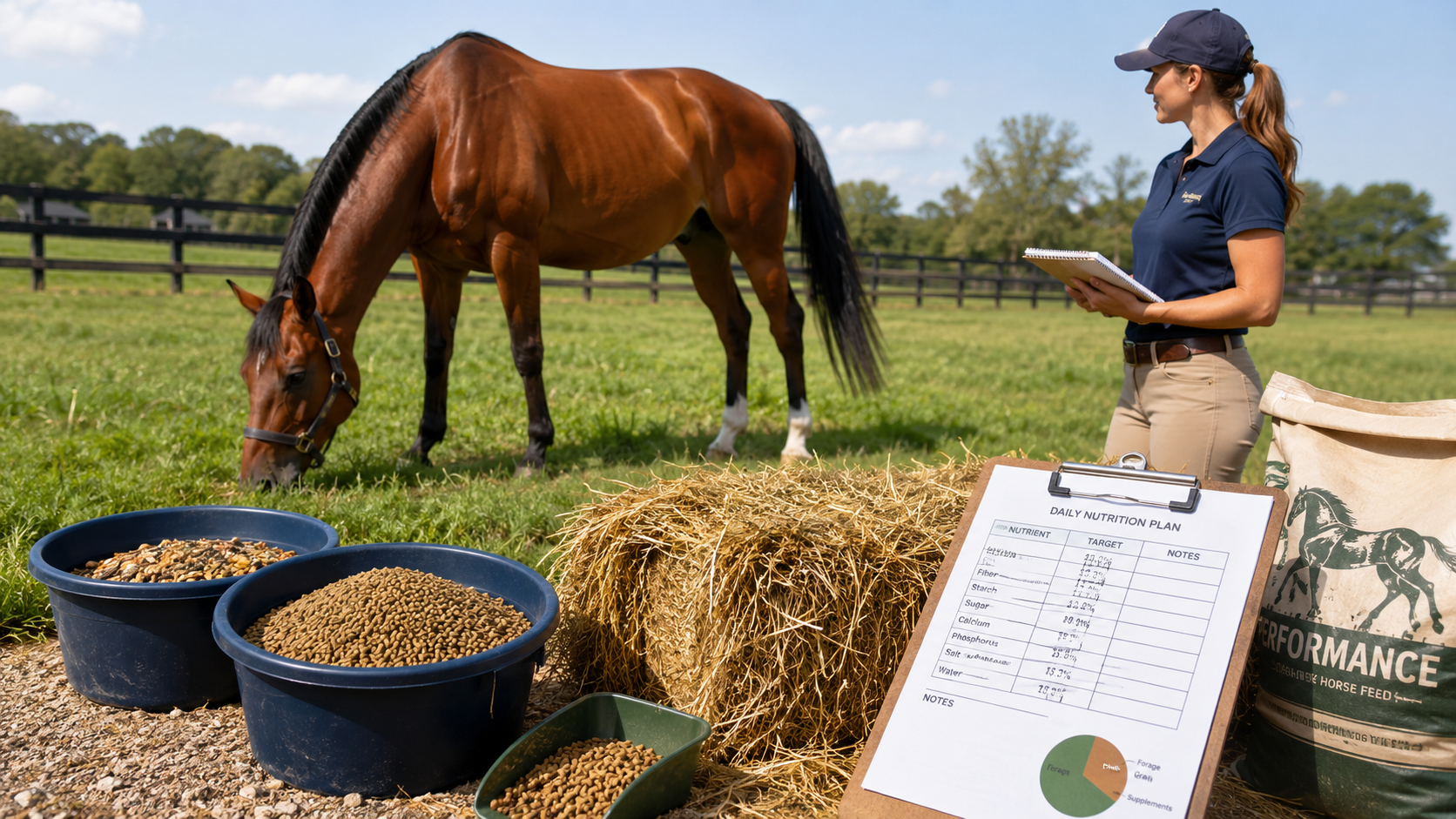
Good nutrition is a foundation of equine performance. A recent feature covered by Medical News Today, originally published at Horse Sport and titled “Pasture-to-Podium Nutrition Management,” highlights practical considerations for feeding sport horses from daily grazing through competition season. The piece emphasizes matching feeding strategies to a horse’s work load and environment to support condition, recovery, and readiness.
Medical News Today referenced the Horse Sport article as its source. That Horse Sport feature explored the continuum of feeding decisions owners and trainers face, from pasture management and forage quality to concentrates and targeted supplementation as competition approaches. It framed nutrition as a management problem that spans everyday care and peak-performance demands.
Why this matters
Feeding choices affect more than immediate weight. Diet influences energy availability, muscle recovery, hydration needs, and how a horse maintains condition across changes in workload and season. For owners and trainers of sport horses, mismatches between feed and demand can impair performance, increase injury risk, or complicate recovery.
Context
Many horses spend significant time on pasture, but grazing alone does not always meet the nutritional profile required for regular training or competition. Factors such as pasture quality, forage availability, workload intensity, climate, and individual metabolism interact to determine whether additional hay, concentrates, or supplements are needed. The Horse Sport piece framed nutrition as a dynamic process, not a one-time prescription.
Evidence and practical points reported
The Horse Sport feature, as summarized by Medical News Today, discussed practical steps for aligning feeding with goals. Key themes included assessing forage quality, monitoring body condition rather than relying solely on weight, adapting rations for training phases, and using targeted supplements only when indicated. The article encouraged collaboration with veterinarians and qualified equine nutritionists for individualized plans.
What to keep in mind
General principles are useful, but individual horses vary. Pay attention to body condition scoring, performance signs such as recovery time after exercise, and changes in behavior or coat condition. Sudden diet changes can upset digestion, so any adjustment should be gradual. Also consider water and electrolyte needs around intense work and travel.
Limitations
The coverage in Horse Sport and the Medical News Today summary is descriptive and practice oriented rather than a presentation of new scientific trials. It provides management guidance but does not replace diagnostic testing or tailored nutritional evaluation. Evidence strength and specific recommendations can vary by individual case and by the expertise of consulted professionals.
The bottom line
The Horse Sport piece highlighted by Medical News Today reinforces a practical truth: effective equine nutrition requires ongoing assessment and alignment of feed with a horse’s workload, environment, and condition. Owners and trainers should treat nutrition as a dynamic part of management and consult a veterinarian or equine nutritionist before making significant changes to a horse’s diet.
Medical caution: for veterinary advice specific to your horse, speak with a qualified veterinarian or an accredited equine nutritionist before altering feed, supplementation, or management practices.