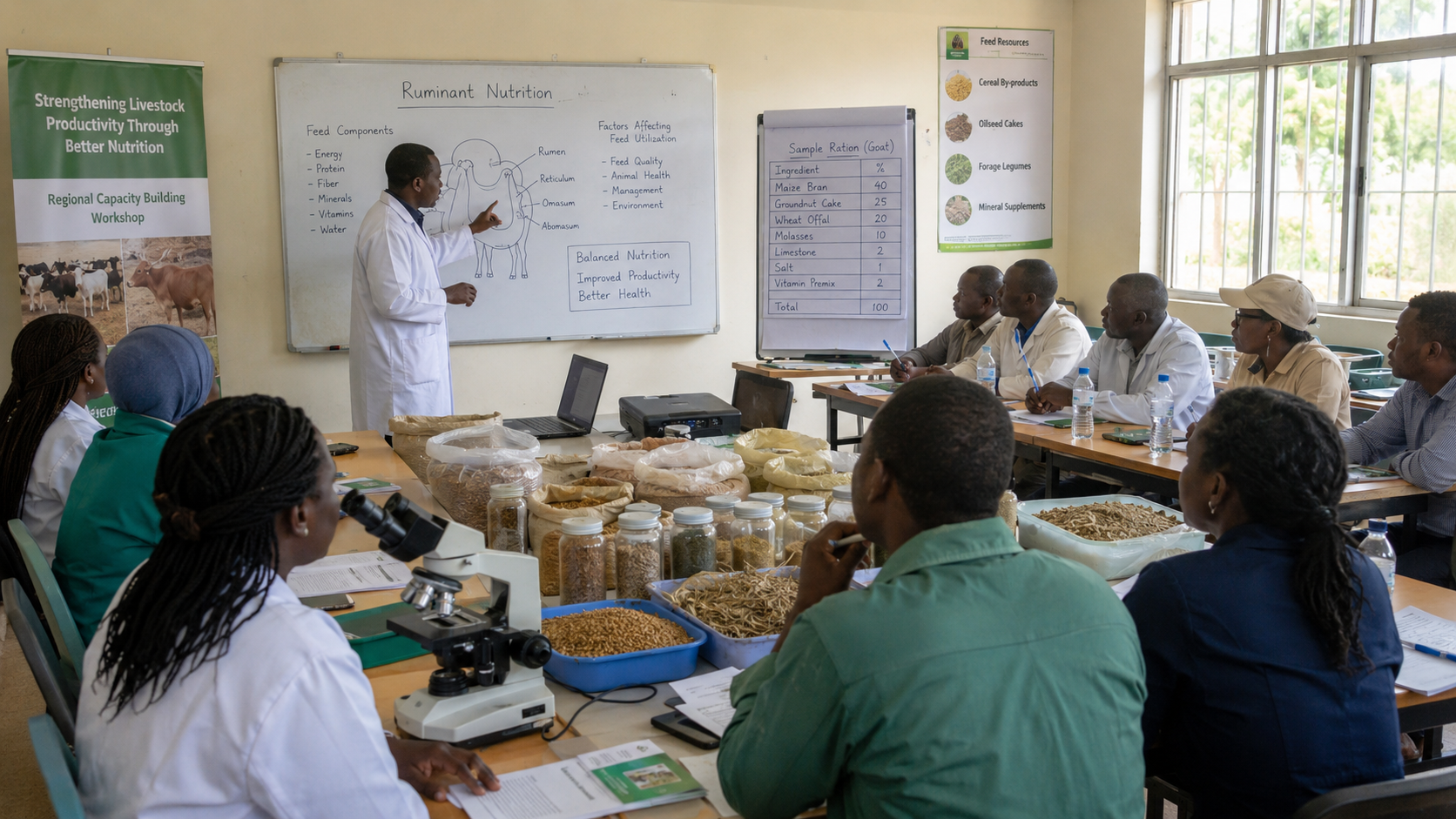
The Atomic Energy Authority recently hosted a regional training course focused on animal nutrition, Medical News Today reports. The announcement highlights ongoing efforts to strengthen technical skills that support livestock management, research, and food systems in the region.
Medical News Today provided the initial report that the Atomic Energy Authority organized the course. Beyond that attribution, public details published by the outlet were limited, and the report did not include a detailed syllabus, participant list, or outcomes.
Context
Training programs on animal nutrition can cover a range of topics, from basic feeding strategies and feed evaluation to more technical methods used in research and quality control. Agencies with ties to nuclear science sometimes offer specialized instruction in laboratory techniques that support agricultural research, such as nutrient tracing and feed analysis, but the Medical News Today brief did not specify the methods used in this particular course.
Evidence
What is known publicly is the basic fact that the Atomic Energy Authority hosted a regional course on animal nutrition, as reported by Medical News Today. Public announcements like this usually aim to build capacity among veterinarians, animal scientists, extension workers, and laboratory technicians by sharing up-to-date approaches to improving animal growth, feed efficiency, and product safety.
Why this matters
Stronger technical skills in animal nutrition can have practical effects: better feed management can improve animal health and productivity, reduce wasted resources, and support food security. For policymakers and agricultural stakeholders, regional training can also help harmonize practices across borders and create networks for future collaboration in research and extension.
What to keep in mind
The Medical News Today report did not provide specifics on content, locations, or participants, so readers should avoid drawing detailed conclusions about techniques taught or immediate impacts. If you work with livestock or in agricultural policy and want to know whether the course is relevant to you, contact the Atomic Energy Authority or local agricultural extension services for the official program summary and materials.
Medical caution: any changes to animal feeding plans, supplements, or laboratory methods should be made in consultation with a qualified veterinary nutritionist or animal health professional.
The bottom line
Per Medical News Today, the Atomic Energy Authority hosted a regional training on animal nutrition. The announcement signals investment in technical capacity that could support livestock health and food systems, but public information is limited. Stakeholders seeking practical details should request the official course materials or summaries from the hosting authority before making operational or policy changes.