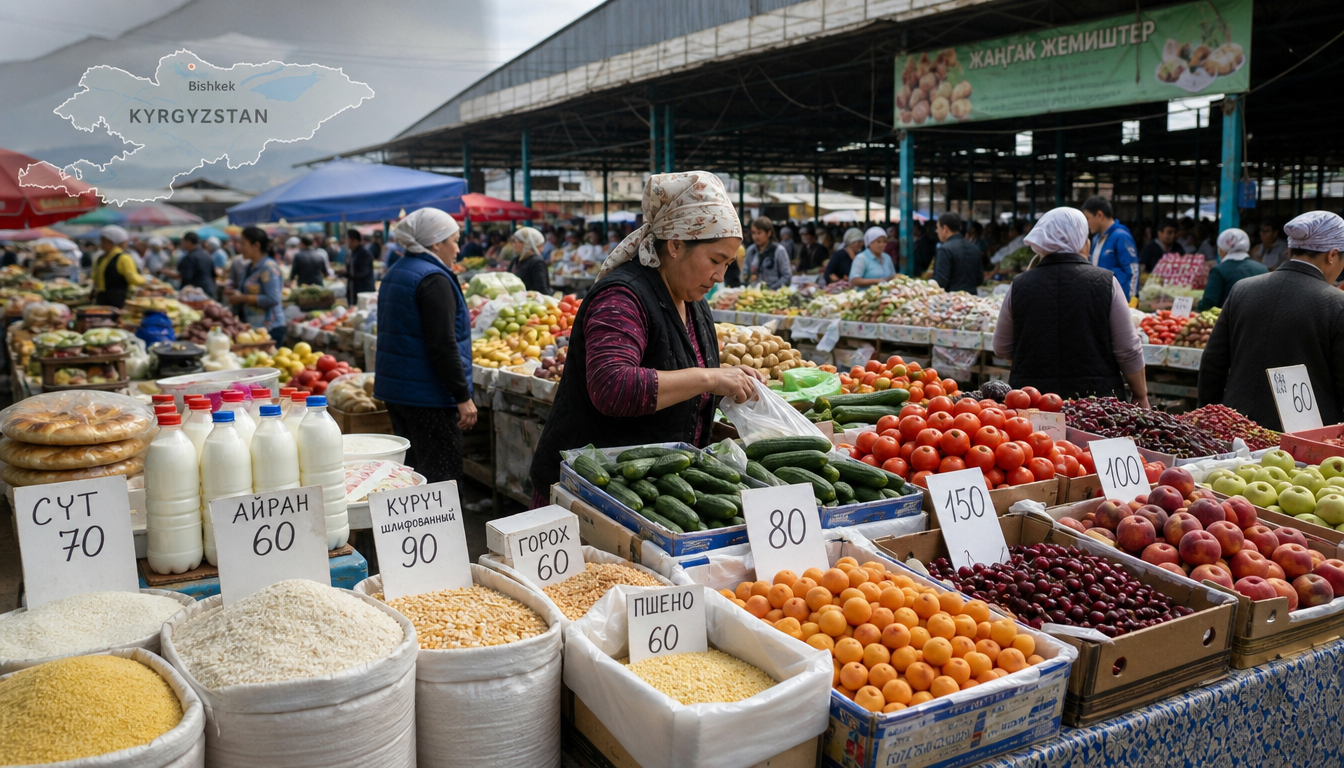
A 2025 update using the ENHANCE modeling platform examines the cost and affordability of a nutritious diet in the Kyrgyz Republic, with implications for national food policy and social protection programs. The analysis, posted on ReliefWeb and summarized by Medical News Today, highlights where nutrient shortfalls and price barriers may be preventing households from accessing a healthy mix of foods.
The ReliefWeb report uses the ENHANCE tool to estimate what a locally available, nutrient-adequate diet would cost in the Kyrgyz Republic and to identify which nutrients are most difficult or expensive to obtain. Medical News Today covered the release and its public health implications.
Why this matters
Affordability is a major driver of dietary choice. When healthy foods cost substantially more than staple calories, households — especially low-income families — can struggle to meet recommended intakes of protein, vitamins, and minerals. That increases the risk of undernutrition, micronutrient deficiencies, and diet-related poor health across all ages, and complicates efforts to improve maternal and child nutrition.
What the analysis looked at
The ENHANCE platform models the least-cost combination of locally available foods that meets basic nutrient requirements, using market price and food composition data. Applied to the Kyrgyz Republic for 2025, the update maps where nutrient gaps exist, and estimates the relative affordability of a diet that meets those needs compared with typical household incomes or expenditure patterns.
Reports of this type are intended to inform policymakers, program planners, and donors by indicating which nutrients or food groups are most costly to obtain, and where interventions such as food fortification, targeted subsidies, or behavior change programs could be most useful.
What to keep in mind
Modeling studies are useful planning tools but have limits. They do not measure what people actually eat, only what a nutritionally adequate diet would cost based on available price and nutrient data. Results depend on the quality and timeliness of local price data, seasonal variations in availability, and assumptions about which foods are acceptable in household diets.
Neither ENHANCE nor the ReliefWeb summary replaces household surveys or intake studies. Cultural preferences, food access within remote areas, and informal market pricing can alter real-world affordability. The report is a diagnostic step, not a prescription.
The bottom line
The 2025 ENHANCE-based update for the Kyrgyz Republic, as reported by ReliefWeb and Medical News Today, illustrates how modeling can pinpoint nutrient gaps and cost barriers to healthy diets. For policymakers, the findings can guide choices on subsidies, fortification, or social safety nets. For the public, the analysis underscores that promoting access to diverse, affordable foods remains central to improving nutrition.
Anyone with specific health or dietary concerns should consult a qualified health or nutrition professional before making changes based on this type of population-level analysis.